Physical Education
Pannal Primary School’s Mission Statement is “Enjoying learning together, building foundations for life”.
We feel that Physical Education plays an important role in helping us to fulfil this statement. Our vision is for all children to be able to enjoy participating in physical activity in PE, during lunchtime activities, at after school clubs, at festivals, during competitions/tournaments and through learning leadership skills. We have worked hard to develop our Physical Education offering in school both within curriculum time and during extra-curricular activities.
Our PE curriculum
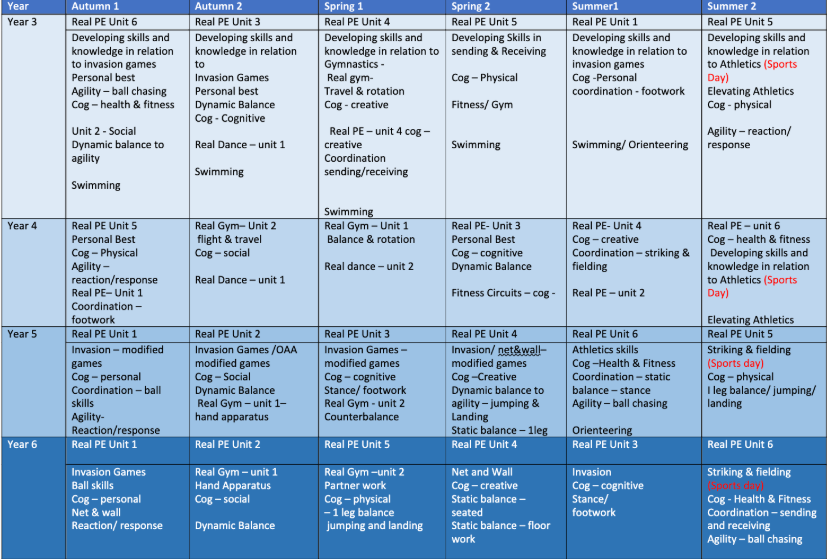
The National Curriculum for PE forms the basis of our teaching and is delivered using the Real PE model and the online learning platform, Jasmine. The Jasmine online platform provides interactive lessons for each year group and ensures progression from Early Years (EYFS) through to Year 6. We feel that Real PE fits our school’s context and provides for all ability levels. In EYFS the strands of Real PE dovetail with the Early Learning Goals the children are striving to achieve and helps the children get ready for PE in Year 1.

The Real PE program has been in place at Pannal Primary School since 2018 and the children are becoming increasingly competent with the program’s approach and transition seamlessly between year groups. Children undertake modules from both the Real PE, Real Gym and the Real Dance schemes of work throughout the year alongside other sports and skills.
Real PE has the mantra – “Creating positive relationships with physical activity for life” which is echoed by all at Pannal Primary School. Real PE provides progression for all year groups, the ability to build on previously taught skills and a consistent approach. Children start with a warm up which may be a ‘fusion’ warm up that exercises both cognitive and physical skills, they are then introduced to a new skill and are then taught how to incorporate this skill in an activity or mini game. Strategies and tactics are discussed but no formal team game rules are explicitly taught.
The children consider the health implications of being physically active and cross reference knowledge from other subjects to understand the importance of exercise.
We want pupils to gain confidence in their abilities and excel in a broad range of skills and physical activities. Our PE lessons give our children the opportunity to do their best. The effort that the children put into their learning is praised and this ensures children are not afraid to fail.
PE or other physical activity takes place for 2 hours per week. All staff ensure that children are active for a large percentage of each PE lesson to help with fitness and enjoyment.
PE lessons are inclusive to all in the class and are adaptable so that each child learns a new skill at their own level. Each lesson builds on the skills and techniques taught in the previous lesson. Personal challenge forms an integral part of Real PE lessons. Children are taught to challenge themselves in the lessons. The Real PE and Gym program offers filmed demonstrations of each task for the children to watch and they can then move through the difficulty levels to suit their ability. Teachers will also adapt the task in the moment to provide an additional layer of challenge.
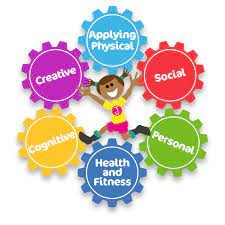
The multi-ability cogs, within the Real PE program, help our children to work collaboratively. The social cog, in particular helps children to reflect on how to work well with others, as well as encouraging and respecting each other. Children are encouraged to come up with their own assessment criteria e.g. creativity, fluency, body tension. The cogs fit well with the Pannal Values and Choices that are promoted in all areas of school life.
After having been a Real PE Legacy School we have continued to embed the real PE scheme throughout our school which we hope will make a real difference and create a real legacy for every child.
Real Dance is part of the curriculum in Years 1,2 and 3 and links well with the Real PE programme as does the Real Gym which we use throughout the year groups.
We are always evolving, and the children also get to experience yoga sessions throughout the year.
We introduced a new initiative called BURSTS in EYFS. which has been produced by the same organisation that developed Real PE. BURSTS will enable stronger links between school and the parents of EYFS children in order to promote physical wellbeing. This is done via an App.
In 2025, our school had the opportunity to introduce Skillabus sports skills courses for Years 1-6, this is via an app.
In addition to the above, children participate in athletics in the summer term and our children all swim weekly for 18 weeks of sessions during Year 3.

The wide range of PE which is delivered, aims to engage and inspire all pupils through the balance of Participation and Excellence:
Participation
Physical education taught across the school is wide and varied, both during the school day and as extra-curricular clubs.
Opportunities include:
PE lessons using the Real PE, Real Gym or Real Dance programmes (see above)
Traditional team games; football, netball, hockey, cricket
Individual pursuits; cross country, fitness training, athletics, golf, boccia, yoga, orienteering
Bespoke activities: fencing, archery, lacrosse
Maths of the Day/ Active Learning style activities
In addition, over the years some paralympic games have been introduced to the school, leading on from previous Olympic Games; the teachers were trained, and the pupils have enjoyed learning the skills associated with these games. The Olympic values are still prevalent across the school.
Over recent years, funds have been used to employ a Specialist PE teacher and this expertise is used across the school to teach pupils from Early Years to Year 6 in PE activities ranging from basketball to multi-skills.
This diet of sport builds strong relationships of trust between pupils and school staff and impacts positively upon the engagement and trust between them in the classroom. The discipline demanded of the children in sports impacts upon behaviour within the classroom, and the school attributes the excellent behaviour for learning within the school as a direct result of the culture of discipline, respect and dedication nurtured through sports activities.
In our experience, the key is to capture the imagination of the whole school community to generate excitement and interest in sports. Staff sporting interests are highlighted to the children to instil a love of sports and physical activity and to encourage them to take their love of sports into their adult lives.
Excellence
In every aspect of school life, high expectations for all pupils are evident and ingrained in the culture and ethos of the school. Not unlike every other school, there is considerable pressure to maintain high standards but the school’s leadership recognises that one of its key contributing tools for success has been the importance placed on competitive sport. Through sport, the children begin to develop the important qualities of discipline, resilience, communication, teamwork, and ambition: qualities that they are then able to use in their learning within the classroom.
From an early age, competitive sport is nurtured and encouraged, with KS1 pupils preparing for and entering local competitions in athletics, football, and dance. In KS2, the school’s policy is for every child to take part in at least one sport festival, with staff identifying the pupils with specific talents in, for example, football, cross country or orienteering. Skills are taught through P.E. lessons and through a wide variety of sports provision offered after school, both through Teachers but also through highly skilled Teaching Assistants who, with their skill and enthusiasm, ensure that sport is enjoyed by all.
In Year 5 & 6 we deliver a Sports Leadership programme. The pupils use this programme to learn how to lead extra-curricular sporting opportunities for younger pupils. This is an engaging project for all pupils.
The school is keen to provide a wide range of extra-curricular clubs for pupils throughout the year. Pupils enjoy the opportunity to try new sports such as Badminton, Netball, Karate, Street Dancing, Tennis, Football, Multi-skills, Hockey, Cricket, Rounders, Athletics and Cross Country. We monitor participation and check uptake against gender, SEN and free school meals. We also enter a wide range of competitions in these sports and qualified for the North Yorkshire Regional finals in cricket and football in both boys and girls in Year 5/6..
What our children say
In pupil questionnaires, PE surveys and Pupil Voice discussions P.E. is always the favourite subject of the vast majority of pupils. Children understand that sport is not just about winning but also taking part.
Transition between Key Stages
We have recently introduced transition sessions between the key stages with joint PE lessons arranged for the end of the academic year with children from EYFS and Year 1 and for children in Year 2 and Year 3. These sessions enable the younger children to get a taste for what PE in their new Key stage will be like. They are supported by the older children and this also gives an opportunity for the Key Stage 2 children to get to know each other better. This is beneficial for many reasons but not least because the inter school competitions span two year groups at a time and the children are likely to be paired for team events.
Sports Week
Each year we support National School Sports Week by offering each year group the opportunity to try a new sport.
So far, we have had the chance to try lacrosse, rugby, hockey, orienteering, cheerleading, yoga, netball and tennis.
Sports Week coincides each year with the KS1 and KS2 sports days, where we champion participation of every child in activities both on and off the track. Children strive to be Pannal shaped by demonstrating the values and choices they use in all areas of their school life.

PE leading to representative sport for the school
We are keen to inspire our children and to raise participation levels and the profile of sport within the school. We aim to engage more children who are not instinctively drawn to sport. We have had over 75% of Key Stage 2 children representing the school in some form of sporting activity.
All our children have the opportunity to represent the school and recently some of our children qualified for the SEN Panathlon event arranged by North Yorkshire Sport. In addition, a small group of our students participated in horse riding sessions this year in association with Riding for the Disabled Association (RDA). They have all did extremely well and have each attained their Grade 1 certificate in Riding and Horse Care.

Our Year 5/6 boys and girls cricket teams qualified for the Harrogate finals, leading to the North Yorkshire finals and then both teams qualified for the Regional finals at Hunslet Nelson Cricket Club.(July2025)
PE leading to participating in a sport outside of school
We also aim to develop those children who are already involved in the sporting life of the school to a greater standard and to allow them to compete at higher levels. This is achieved through entering teams in cluster and district competitions. Our teams have won through to county finals in many different sports.
Our local secondary schools also offer a range of sports activities for local primary schools which we actively signpost our pupils to along with local sporting clubs.
Extra-curricular activities
The school is keen to provide a wide range of extra-curricular clubs for pupils throughout the year. Pupils enjoy the opportunity to try new sports such as Badminton, Netball, Karate, Street Dancing, Tennis, Football, Multi-skills, Hockey, Cricket, Rounders, Athletics and Cross Country.
All of the events and opportunities above have led to Pannal Primary School being awarded the Gold Award by School Games which we are very proud of.

Partnership Work
After a number of changes within the Harrogate area regarding sporting opportunities, we are happy to be joining Sporting Influence in their sporting programme, including competitions and festivals in a number of sports.
We recognise the impact upon community cohesion, which is strengthened through the school’s involvement in competitive sport. Pupils from local primary schools build good relationships with each other which lends itself to a smoother transition to secondary school.
Parental involvement is high, with many of our parents offering to support or just come along and cheer on the team, and our relationships with parents are deeper and more impactful as a result.
We believe that physical activity positively benefits the development of a child’s character. By participating and competing in sport, we believe wholeheartedly that a child who learns to be resilient, disciplined, respectful and determined on the sports field will apply the same skills within the classroom.
Assessment, monitoring and staff training
Real PE have recently provided a new platform for assessment which we will be using going forward. These records allow easy assessment of pupils and enable us to note their next steps.
We monitor participation in representative sporting fixtures on behalf of the school and check uptake against gender, SEND, Pupil Premium and free school meals.
All staff who deliver PE lessons have received full training by the Real PE provider and the specialist PE teacher. Training and updates are given to staff as required.
The specialist PE teacher attends PE Network meetings to liaise with other teachers and share best practice.
PE and Sports Premium funding (NOTE these need docs adding)
Click here to read about how we are using our PE and Sports premium funding.
Click here to see the Sports Partnership Key Indicators of Improvement.
PE Curriculum
Purpose of study – Physical Education
A high-quality physical education curriculum inspires all pupils to succeed and excel in competitive sport and other physically demanding activities. It should provide opportunities for pupils to become physically confident in a way which supports their health and fitness. Opportunities to compete in sport and other activities build character and help to embed values such as fairness and respect.
Aims - The national curriculum for physical education aims to ensure that all pupils:
- develop competence to excel in a broad range of physical activities
- are physically active for sustained periods of time
- engage in competitive sports and activities
- lead healthy, active lives
Key Stage 1 Attainment Target - Pupils should develop fundamental movement skills, become increasingly competent and confident and access a broad range of opportunities to extend their agility, balance and coordination, individually and with others. They should be able to engage in competitive (both against self and against others) and co-operative physical activities, in a range of increasingly challenging situations.
Pupils should be taught to:
- master basic movements including running, jumping, throwing and catching, as well as developing balance, agility and co-ordination, and begin to apply these in a range of activities
- participate in team games, developing simple tactics for attacking and defending
- perform dances using simple movement patterns
Foundation and Key Stage 1 Curriculum

Key Stage 2 Attainment Target - Pupils should continue to apply and develop a broader range of skills, learning how to use them in different ways and to link them to make actions and sequences of movement. They should enjoy communicating, collaborating and competing with each other. They should develop an understanding of how to improve in different physical activities and sports and learn how to evaluate and recognise their own success.
Pupils should be taught to:
- use running, jumping, throwing and catching in isolation and in combination
- play competitive games, modified where appropriate [for example, badminton, basketball, cricket, football, hockey, netball, rounders and tennis], and apply basic principles suitable for attacking and defending
- develop flexibility, strength, technique, control and balance [for example, through athletics and gymnastics]
- perform dances using a range of movement patterns
- take part in outdoor and adventurous activity challenges both individually and within a team
- compare their performances with previous ones and demonstrate improvement to achieve their personal best
Swimming and Water Safety - All schools must provide swimming instruction either in key stage 1 or key stage 2.
In particular, pupils should be taught to:
- swim competently, confidently and proficiently over a distance of at least 25 metres
- use a range of strokes effectively [for example, front crawl, backstroke and breaststroke
- perform safe self-rescue in different water-based situations
Key Stage 2 Curriculum