Art and Design
In Art and Design we aim to provide a well-rounded experience for our pupils. We want to equip them with the skills to create their own art works, help them to develop a visual literacy and gain knowledge about great artists and designers.
At Pannal, Art (which falls mainly under the ‘Expressive Arts and Design’ area of the EYFS curriculum) starts in the Early Years with children observing, enjoying and recording the world around them. Children will have the opportunity to take part in Art activities daily as it is an integrated part of the EYFS classroom. Children are encouraged to be independent artists, and to explore the wide range of media and materials available to them in the creative areas of the classroom. The children take part in both planned and spontaneous activities. For example, they may use powder paints to create visual representations of fireworks they have seen, they may explore colour mixing to try and paint something that the adults have provided as a provocation or they may explore the feel and textures of chalks on the playground.
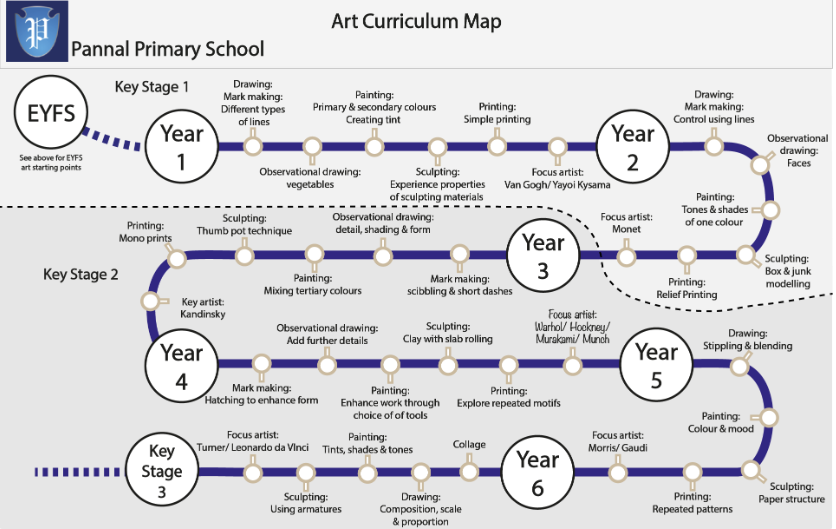
As children move through the school, they acquire and develop skills in drawing, painting, print making and sculpture. The progression of these skills is across the year groups and key stages. Children begin by exploring the potential of different materials and techniques and record their findings in a sketchbook which accompanies them through school from Year 1 – Year 6. The next step is to allow children time to create art that is valued, with opportunities to work independently and to collaborate with others. It is important to us that we provide an environment where children feel safe taking risks and are not intimidated by ‘getting it wrong’. Teachers not only engage and inspire our pupils, but challenge them to think critically about their work and the work of other artists. We provide opportunities for children to share and discuss their opinions in ways that are respectful.
As children develop mastery through their practise and development of ideas, they also gain an understanding of line, colour, shape, pattern, texture, tone and form. The acquisition of this visual language, together with the development of subject specific vocabulary and knowledge of some great artists and designers is also an important part of the curriculum.
Children are taught about ten specific artists and designers which have been chosen to reflect a broad spectrum of Western art movements. They include well-known artists that children are likely to encounter in their lives away from school, as well as artists and designers that reflect some aspects of British art history, including artists from Yorkshire. When looking at the work of these artists, children are encouraged to make links and connections to a wider context (historical or geographical, for example). Wherever possible, artworks (including those of other artists) are referenced while children are learning an artistic skill or technique and this in turn helps to further develop their visual literacy.
Knowledge organisers are used in each year group and include vocabulary progression, examples of outcomes for discrete skills and information about the featured artist/s.
We want our teaching of Art and Design to foster a love of art in our pupils and furnish them with the skills and enthusiasm for future study of the subject. In developing their knowledge and understanding of art and artists we hope our children will begin to appreciate how art and design contributes to the cultural heritage of where they live.